SKOCH Summit

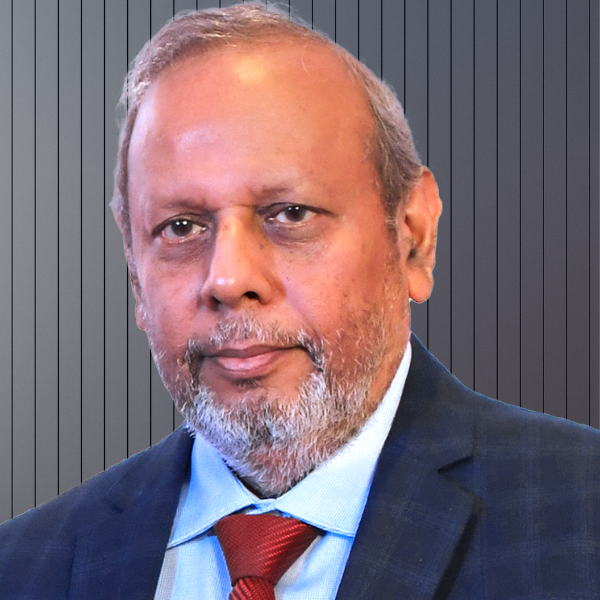
Prof S Mahendra Dev
Chairman EAC-PM
Prof. S. Mahendra Dev is presently Chairman, Economic Advisory Council to the Prime Minister (EAC-PM). He was the Director and Vice Chancellor, Indira Gandhi Institute of Development Research (IGIDR) in Mumbai for 12 years during 2010-2022. Prior to this position, he was Chairman of the Commission for Agricultural Costs and Prices, Ministry of Agriculture from 2008 to 2010. He was Vice Chairman of the Board of Trustees of International Food Policy Research Institute (IFPRI), Washington, D.C. He was also member of the Board of IFPRI for seven years from 2013 to 2019. He was member and Acting Chairman of the National Statistical Commission, Government of India. He got the prestigious Malcolm Adisesaiah Award in 2016. He was Director, Centre for Economic and Social Studies, Hyderabad, India for 9 years from 1999 to 2008.He is member of executive committee of International Economic Association. He did Ph.D. from the Delhi School of Economics and post-doctoral from Yale University, USA.
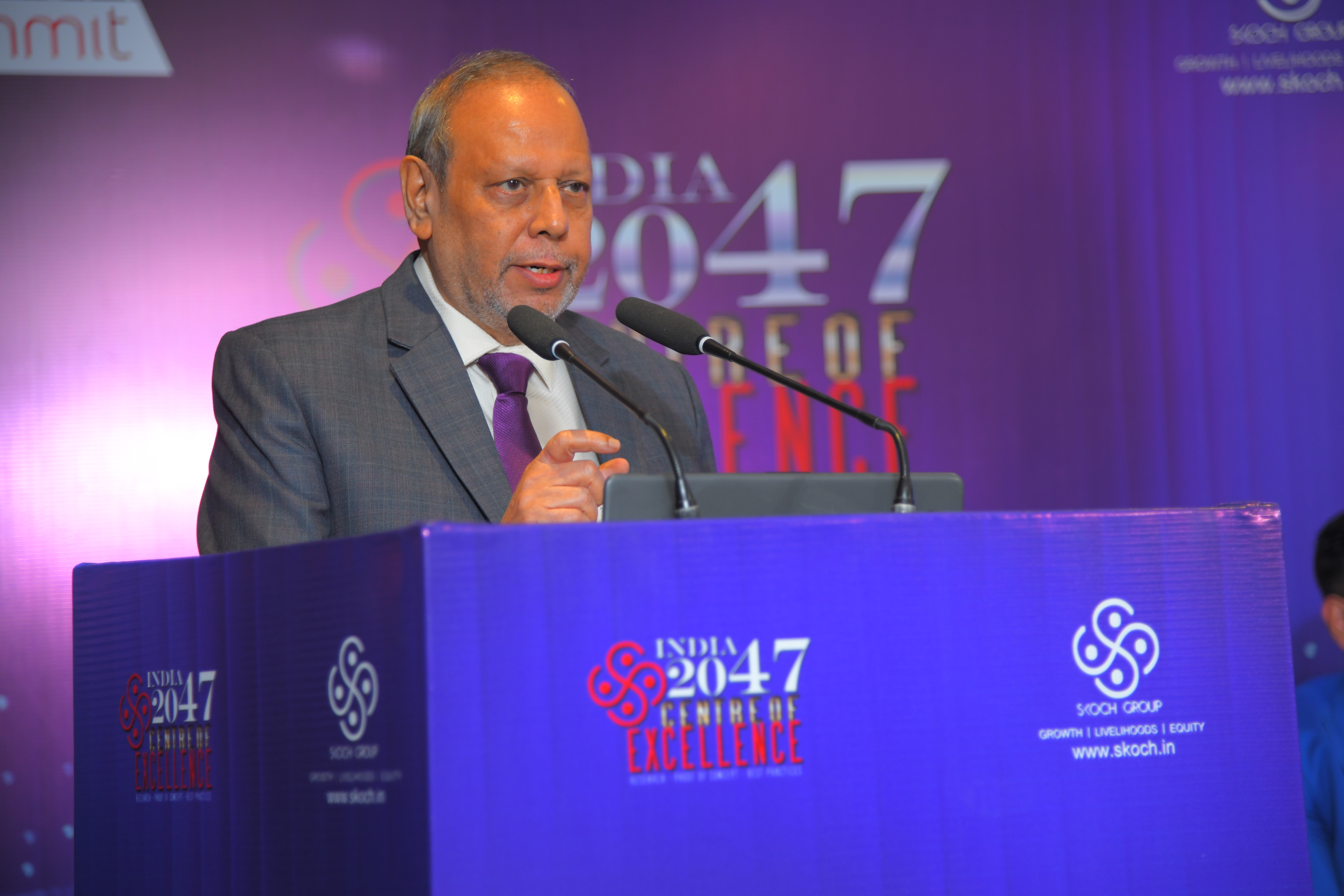
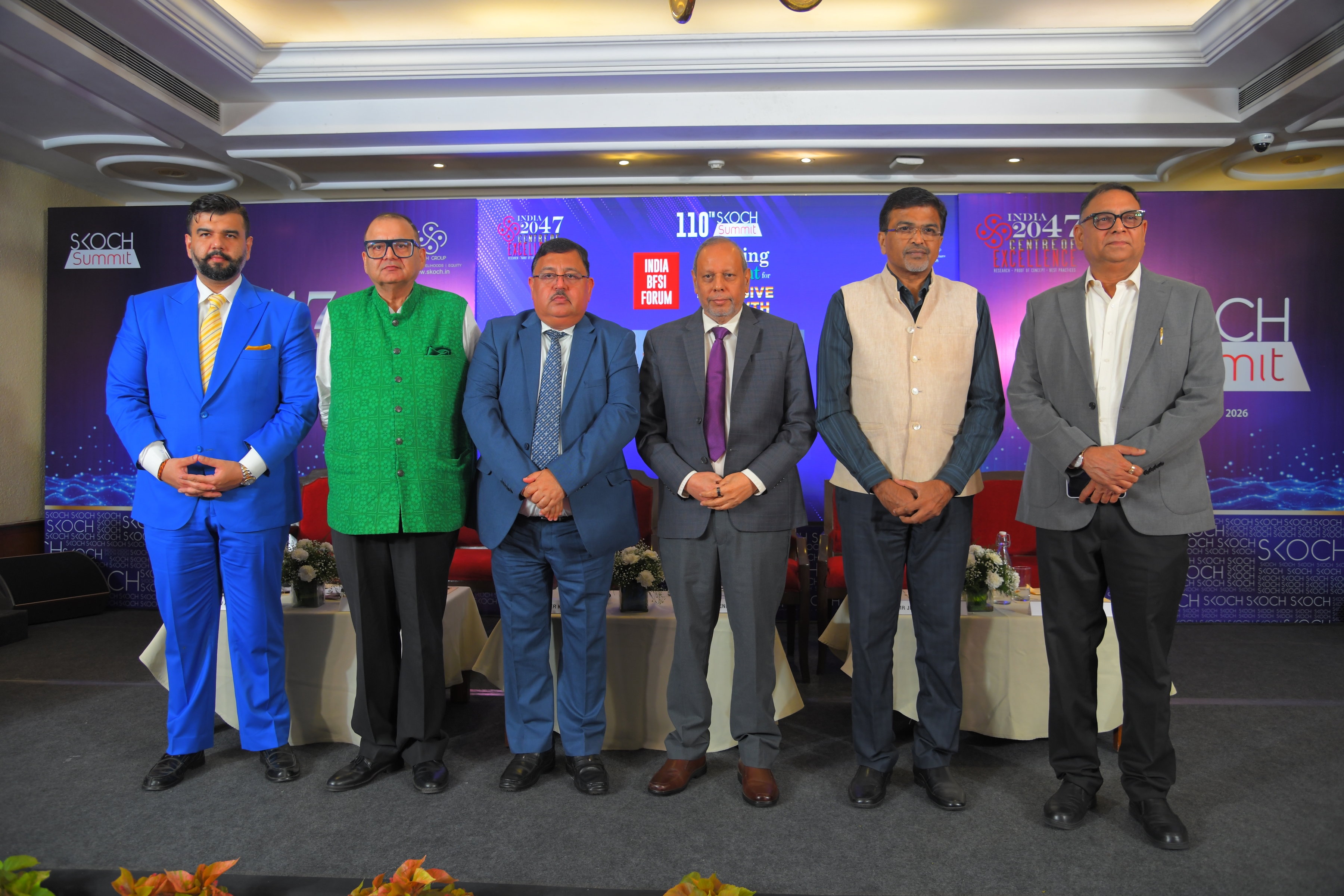
Prof S Mahendra Dev at the 110th SKOCH Summit: financing the foundations of Inclusive Growth
Prof S Mahendra Dev
Chairman, Economic Advisory Council to the Prime Minister (EAC-PM)
Key Points*
- The speaker says India has made remarkable progress in financial inclusion through bank accounts, Jan Dhan-Aadhaar-Mobile architecture, direct benefit transfers and digital payments.
- He emphasizes that financial inclusion should now move beyond access and focus on meaningful use, quality and outcomes.
- He identifies four priorities: meaningful financial use, finance for agriculture and MSMEs, resilience and risk protection, and technology-led inclusion.
- He argues that different groups need different financial products, including savings, insurance, pensions, working capital and timely agricultural credit.
- He stresses that agriculture finance should support productivity, diversification and higher farm incomes, not just seasonal crop production.
- He highlights the role of farmer producer organizations, self-help groups and cooperatives in supporting small farmers and improving incomes.
- He notes that MSMEs often face limited collateral, weak credit histories, irregular cash flows and delayed receivables.
- He argues that finance should help viable farms and enterprises invest, raise productivity, increase incomes and create employment.
- He presents insurance, savings and pensions as essential tools for protecting households and enterprises from shocks.
- He says crop insurance complements agricultural credit, but long-term resilience also requires investment in irrigation, storage, climate-resilient agriculture and efficient technologies.
- He explains that technology can lower service costs, improve lender information and help banks and fintechs reach underserved households and enterprises.
- He warns that digital finance can also create risks such as opaque pricing, unsuitable borrowing, misuse of personal data and weak grievance redressal.
- He calls for digital inclusion to combine technology with sound lending, transparency, customer protection and human support.
- He argues that Viksit Bharat requires not only higher growth but also inclusive, sustainable development, productive employment and rising incomes across regions.
- He concludes that the next phase of Banking Bharat should be judged not simply by how much finance reaches people, but by what that finance enables in terms of opportunity, security and participation.
* This content is AI generated. It is suggested to read the full transcript for any furthur clarity.
Transcript
Good afternoon to all of you. First, let me thank the SKOCH Group, Mr. Sameer Kochar, Rohan and others for inviting me to this 110th SKOCH Summit. The theme of today's conference, Banking Bharat for Inclusive Growth, is important and timely because we have been talking about growth and inclusiveness also. And the two presentations by Dr. Rohan and Mr. Sameer are very good on financial deepening and inclusive growth. We also have a very distinguished panel to discuss this subject. So, I compliment the SKOCH Group for organizing this important summit.
There is no doubt that India has made remarkable progress in financial inclusion over the last decade. The expansion of bank accounts, the Jan Dhan-Aadhaar-Mobile architecture, direct benefit transfer and digital payments has brought a very large part of the population into the formal financial system. Around 56% of Jan Dhan account holders are women and about 78% of the accounts are in rural and semi-urban areas. So, the reach of banking has also expanded substantially across rural and semi-urban India. In fact, the RBI's Financial Inclusion Index, which measures not only access but also usage and quality of financial services, increased from 43 in 2017 to 70 in 2026. As the concept note mentions, opening an account or creating access is only the first step.
Financial inclusion should lead to better outcomes, as mentioned earlier. And Viksit Bharat does not mean achieving higher growth alone. We want to become a developed nation, but it has to be inclusive and also more sustainable. So, the financial system has an important role in achieving these objectives of growth, inclusiveness and sustainability. In this context, I will make four points. First, the shift from access to meaningful use. Second, finance for agriculture and MSMEs. Third, resilience and risk protection. Fourth, the role of technology in the next stage of inclusion.
First, from financial access to meaningful use, because an account gives a household entry into the formal financial system and possible access to credit. But the next question is: what happens after access has been created? Are households able to save and build greater security? Can farmers and small and medium enterprises obtain finance suited to their needs and use it for raising productivity and incomes? Does insurance protect households and enterprises when a major shock occurs? So, the next phase of financial inclusion has to be judged increasingly by these outcomes. The emphasis also has to move from the number of accounts to the quality and usefulness of financial participation.
For a low-income household, this may mean a safe place for small and regular savings, insurance and pension products. For a farmer, it may mean timely credit matched to the agricultural cycle and finance for allied activities. For a small enterprise, it may mean working capital, equipment finance and a credit guarantee where collateral is limited. So, the appropriate financial product is different in each case. This also means that financial inclusion should not cease at access. It requires products and institutions that respond to different economic needs.
The second point is finance for productive India's employment and livelihoods. Agriculture and allied activities still support about 46% of the workforce, while MSMEs are spread across manufacturing, trade and services. So, I will say a few words on changes in agriculture and MSMEs that banks have to keep in mind. It may be noted that global challenges and external factors like geopolitical situations, tariff and trade policies, technology disruptions and climate change affect Indian agriculture and MSMEs. So, we have to keep in mind these global challenges in banking and the financial sector.
Regarding the overall approach to agriculture, the Prime Minister and the government have shifted the focus from production to raising the incomes of farmers. Among others, four factors are important. First, diversification in the crop sector and focus on high-value crops, livestock and fisheries, rather than only rice and wheat, to get higher incomes. Second, focus on post-harvesting and marketing. There are lots of post-harvest losses in many crops. Third, food and agro-processing is important for higher incomes and employment. As Mr. Sameer mentioned, we are planning to have a cluster approach for agro-processing so that most of the activities are in the cluster, including financial services, production and processing, everything at one place. So, that can support farmers and MSMEs.
Fourth is that small farmers need help in input and output marketing. We need institutions like farmer producer organizations, self-help groups and cooperatives to help small farmers in getting better incomes. On priority sector lending, it was introduced 40 years back. We have done a study on priority sector lending at EAC-PM at the district level. It is not serving its purpose by spreading adequately to various sectors and regions. That's what our study showed. It is a controversial topic.
Priority sector lending cannot simply be reduced. But one has to see, for example, that direct lending to certain sectors without infrastructure and markets can lead to inefficient outcomes. So, we have to develop infrastructure, markets and supporting systems. Otherwise, it will lead to inefficient outcomes. So, in agriculture, the problem is not simply the aggregate availability of credit. Farmers require finance at particular points in the agricultural cycle and increasingly need credit for livestock, fisheries, mechanization and other allied activities, not only crop production.
Agriculture finance, therefore, has to support productivity, diversification and higher farm income, not only the seasonal crop cycle. And MSMEs face a related problem. Smaller firms often have limited collateral and formal credit histories, irregular cash flows and delayed receivables, even when the underlying enterprise is viable.
So, Mudra, CGTMSE and TReDS respond to different parts of these constraints. The broader objective in both sectors is the same. Finance should help viable farms and enterprises to invest, become more productive, raise incomes and create employment, rather than treating credit expansion as an end in itself.
The third point is finance for resilience and sustainability. Financial inclusion also has to make households and enterprises more resilient. A household may gradually build income and assets, but a serious illness, accident, death of an earning member or a crop failure can reverse those gains very quickly. Credit can help people invest and move forward, but health problems can also lead to indebtedness. Insurance, savings and pensions help prevent a shock from pushing them backwards.
There has been considerable expansion in this protective side of the financial system. In 2026, cumulative enrollment under the Pradhan Mantri Jeevan Jyoti Bima Yojana had reached 27.8 crore. The Pradhan Mantri Suraksha Bima Yojana had reached 58.8 crore, and other pension schemes had also expanded significantly. For agriculture, resilience is becoming still more important because climate and weather risks directly affect incomes.
Since its introduction in 2016, Pradhan Mantri Fasal Bima Yojana had paid claims exceeding 2.06 lakh crore on more than 26 crore farmers' applications by 2026. So, crop insurance therefore complements agricultural credit. But insurance can compensate for a loss. It cannot by itself reduce underlying risk.
Finance also has to support adaptation and resilience-building investments, including efficient irrigation, climate-resilient agriculture, better storage and energy-efficient technologies. So, banking therefore has two roles. Banking helps households and firms recover when shocks occur, and it finances investments that make them less vulnerable in the first place. So, both for insurance purposes as well as for investment purposes, these are the two roles.
Technology can reduce the cost of reaching customers, make small transactions viable, improve the information available to lenders and allow banks and fintechs to serve households and enterprises that were earlier expensive or difficult to reach. Digital payments show the scale that this infrastructure can achieve. But digitization also changes the risks.
Faster and easier lending can coexist with opaque pricing, unsuitable borrowing, misuse of personal data, aggressive recovery practices and weak grievance redressal. So, RBI's Consumer Protection Framework for Digital Lending also emphasizes transparency about the full cost of a loan, careful use of customer data and access to grievance redressal mechanisms. The objective should be to combine the reach and lower costs of technology with sound lending, trust, customer protection and human support where it is needed.
To conclude, India's progress in financial inclusion has itself changed the nature of the challenge. Successful development creates its own next set of problems. When large sections of the population were outside the formal financial system, expanding access was rightly the first priority. With access now much wider, the question is increasingly whether finance raises productive capacity and economic security.
This is where banking connects directly with inclusive growth. Viksit Bharat will require higher investment and productivity, but it also needs productive employment and rising incomes across regions, including rural and semi-urban India. A financial system that can identify viable borrowers, support enterprise and investment, and protect households against risks can help connect these objectives.
So, the next phase of Banking Bharat should therefore be judged less by how much finance reaches people and increasingly by what the finance enables in terms of better outcomes. Financial inclusion is not the final objective. The objective is greater economic opportunity, security and participation in India's development. So, it is India's turning point now to show to the world that Banking Bharat will deliver better outcomes for Bharat. Thank you very much.